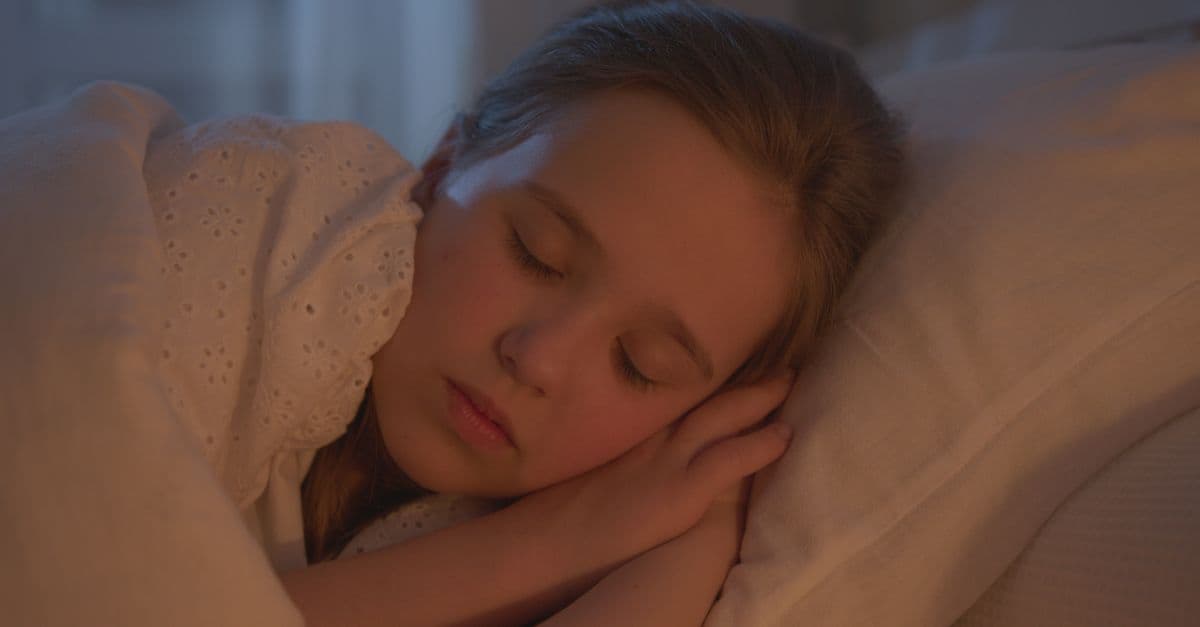
Sleep problems in children: what really works?
Not wanting to sleep, waking at night and bedtime battles are very common in toddlers and children. A fixed routine and a consistent, behavioral approach have strong evidence.
Sleep problems in children are among the most frequently asked questions at the well-baby clinic. Not wanting to go to sleep, waking at night and, evening after evening, battles around bedtime come up at some point in almost every family. Usually there's nothing serious going on and it's about habits you can adjust step by step. The good news: for exactly these problems, a behavioral approach is strongly supported. This article explains what is normal by age, which problems are common, what works and when to call in the GP or JGZ.
In short: what does the evidence say?
AHoog bewijs
- Sleep need decreases with age and differs from child to child; look at how your child functions during the day.
- Not wanting to sleep, waking at night and bedtime battles are very common and often learned behavior.
- A fixed routine and consistent bedtime are the core of the approach.
- Behavioral interventions have strong and lasting evidence: well over 80% of children clearly improve.
- Do not start melatonin on your own; that belongs under the guidance of a doctor or JGZ.
How much sleep does a child need?
There's no exact number that fits every child. Sleep need gradually decreases with age, and there is quite a range between children. As a rough guideline you can use: toddlers aged 1 to 2 years about 11 to 14 hours (naps included), children aged 3 to 5 years about 10 to 13 hours, and children aged 6 to 12 years about 9 to 12 hours [1].
More important than the exact number of hours is how your child manages during the day. A child who gets going reasonably well in the morning, is cheerful and fit during the day and isn't constantly cranky or overtired, is probably sleeping enough — even if it differs from the average.
ℹ️ Overtiredness backfires
A child who goes to bed too late is not necessarily easier to get to sleep. Overtired children often become overstimulated and more hyper instead, which makes falling asleep harder. A slightly earlier, fixed bedtime therefore regularly works better than a later one.
Which sleep problems are common?
Broadly speaking, most complaints revolve around three things:
- Not wanting to go to sleep. Your child drags out the evening, keeps calling for one more story, a drink or a cuddle, or repeatedly gets out of bed. Often this is learned behavior: stalling "works" because it brings extra attention.
- Waking at night. Waking is part of normal sleep — everyone briefly startles awake at night between sleep cycles. It only becomes a problem when a child can't fall back asleep on their own afterward and needs you every time.
- Bedtime battles. Putting them to bed structurally ends in negotiating, crying or anger.
These patterns are rarely a sign of illness. Sometimes something else is going on, such as tension or a change at home (a move, a new little brother or sister), or a physical cause [2].
What works: routine, consistency and behavior
The common thread in what works is predictability. Children fall asleep more easily when their body and brain know what's coming.
- A fixed evening routine. The same sequence every evening in about 20 to 30 minutes: for example washing, brushing teeth, putting on pajamas, a story, lights out. The routine itself becomes the sleep signal.
- A consistent bedtime (and wake-up time). Keep bedtime and wake-up time as equal as possible during the week and at the weekend. That stabilizes the body clock.
- Letting your child fall asleep independently. Put your child in bed sleepy but still awake, so they learn to make the transition to sleep on their own. A child who can do that at bedtime can usually do it at night too.
- Responding calmly and consistently. Limit stimulation in the last half hour: no screens, no wild games, dimmed lights. Respond to getting up or calling out briefly and neutrally, and calmly bring your child back.
✔ Behavioral approach: strongly supported
An authoritative overview of 52 treatment studies concluded that behavioral interventions for bedtime problems and night waking are effective: in the vast majority of the studies, sleep improved, and more than 80% of the treated children showed a clear, lasting improvement over 3 to 6 months [3]. Few approaches for children are so well researched.
Bedtime battles and waking at night: practical
For persistent getting out of bed or nighttime calling out, a calm, predictable response helps. Bring your child back to bed each time, kindly but without much attention. Because attention — including angry attention — can reinforce the behavior, responding calmly and briefly works better than lengthy negotiating or walking them to the couch.
Some parents phase out their presence step by step: first next to the bed, then at the door, then in the hallway. Others choose a slightly later bedtime so the child falls asleep faster, and then move it earlier again step by step. Whichever variant you choose: staying consistent is more important than the exact method. The first few evenings are often the hardest; after that, the resistance usually decreases [4].
⚠️ Melatonin: not on your own
For sleep problems in children, don't reach for melatonin on your own. For most children the behavioral approach is the first and best step. Melatonin is at most sometimes considered for a genuine sleep-onset disorder (for example with ADHD or autism), and then only under the guidance of a doctor or the JGZ — with a targeted dose and timing. Read more in our article on melatonin in children.
When to see the GP or JGZ?
You solve many sleep problems at home with a fixed routine and some patience. Still, it's wise to raise the alarm if:
- the problem persists for a long time despite a consistent approach of several weeks;
- your child clearly isn't functioning well during the day (very tired, irritable, trouble learning or playing);
- there is heavy snoring, pauses in breathing during sleep or noticeably restless legs;
- your child is very anxious around sleep, or there are concerns about development;
- you as a parent become exhausted and things get stuck at home.
Child health services (the well-baby clinic and JGZ) are often the logical first place: they know normal development and can think along about routine and approach. The GP comes into play with persistent or physical complaints and can refer you if needed [5]. Feel free to bring a short sleep diary — what time to bed, how often awake, what time up — that makes the conversation more concrete.
In short, sleep problems in children are usually no cause for concern, but they are something you can do a lot about with a calm, consistent approach. Focus on routine and predictability, keep it up, and call in the JGZ or GP if it persists or your child is suffering.
Frequently asked questions
How much sleep does my child need?
The need decreases with age and differs from child to child. As a rough guideline: toddlers aged 1 to 2 years need about 11 to 14 hours (including naps), children aged 3 to 5 years about 10 to 13 hours, and children aged 6 to 12 years about 9 to 12 hours. Above all, look at your own child: a child who is fit and cheerful during the day is probably sleeping enough, even if it differs from the average.
My child doesn't want to sleep in the evening. What can I do?
Focus on a fixed, calm routine and a consistent bedtime, roughly the same every day. Put your child to bed when they're sleepy, keep the last half hour calm (no screens, no wild games) and be consistent. This behavioral approach is the best-supported one and works for most children within a few weeks.
Is it bad that my child wakes up at night?
Waking briefly is part of normal sleep; everyone does it. It only becomes a problem when your child can't fall back asleep on their own and needs you every time. Teaching your child to fall asleep independently at bedtime helps them pick up the thread again on their own at night too.
Does melatonin help my child?
Don't start it on your own. For most sleep problems in children, a behavioral approach is the first and best step. Melatonin is sometimes considered for a genuine sleep-onset disorder, for example with ADHD or autism, but only under the guidance of a doctor or child health services (JGZ). Read more in our article on melatonin in children.
When should I see the GP or JGZ about sleep problems?
Get in touch if the sleep problem persists for a long time despite a fixed approach, if your child clearly isn't functioning well during the day, if there is heavy snoring, pauses in breathing or noticeably restless legs, or if you as a parent become exhausted. Child health services (well-baby clinic, JGZ) and the GP can think along and refer you if needed.
Sources
- TNO / NCJ (2024). JGZ-richtlijn Gezonde slaap en slaapproblemen bij kinderen. Nederlands Centrum Jeugdgezondheid (NCJ). source
- Thuisarts.nl / NHG (2024). Slecht slapen. Thuisarts.nl. source
- Mindell JA, Kuhn B, Lewin DS, et al. (2006). Behavioral treatment of bedtime problems and night wakings in infants and young children — An American Academy of Sleep Medicine review. Sleep. source
- Kenniscentrum Kinder- en Jeugdpsychiatrie (2024). Slaapproblemen (informatie voor professionals). Kenniscentrum Kinder- en Jeugdpsychiatrie. source
- Moetiknaardedokter.nl / NHG (2024). Slaapproblemen kind — Moet ik naar de dokter?. Moetiknaardedokter.nl. source